Turning an e-learning platform into program management software for KU Lighthouse.
When KU Lighthouse looked at joining Tools, Accelerace’s e-learning platform for startups, I led the discovery with their program managers.
The problem
I interviewed KU Lighthouse’s program managers, and they walked me through their entire process. Booking meetings, keeping notes and following up all happened manually, through emails and messages. They often didn’t know a new startup had joined until it got in touch.
Their notes on each startup were personal and fragmented, and everyone kept them differently. When a startup moved to a new program or mentor, the notes couldn’t follow it, and important learning moments and feedback were lost along the way.
The solution
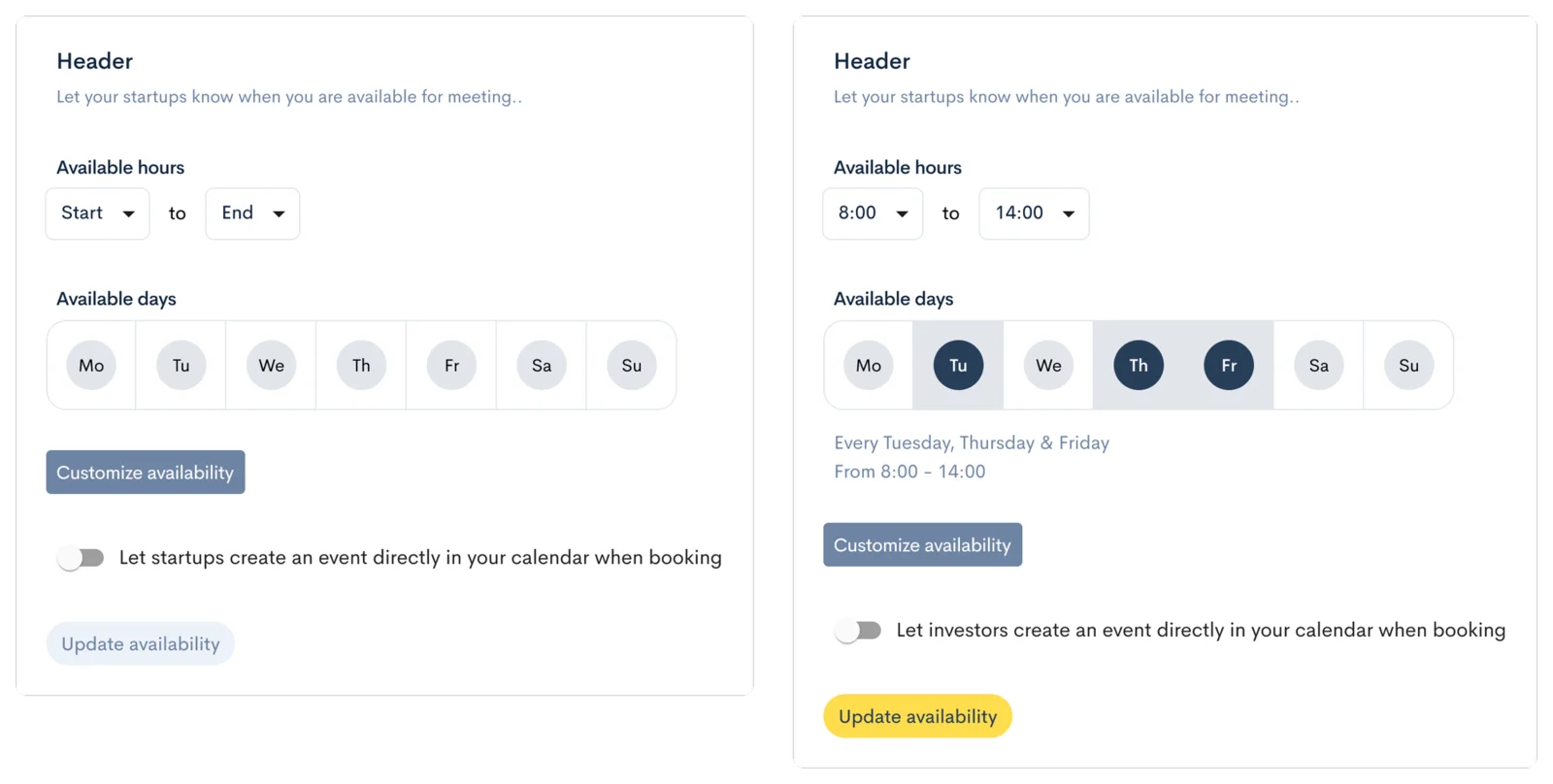
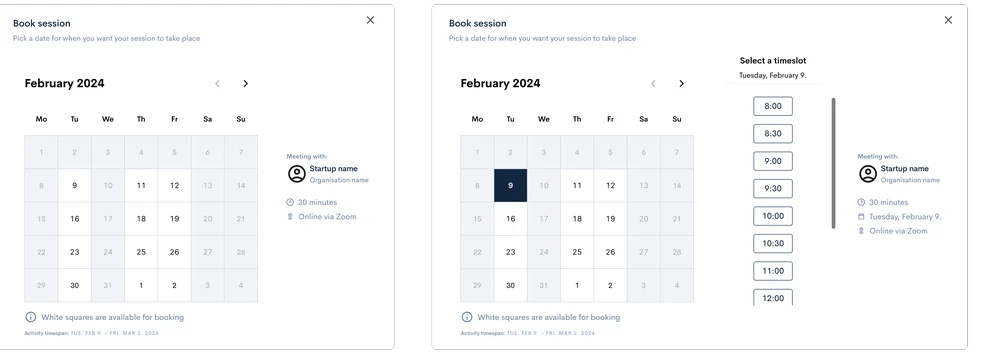
This led me to design a meeting system where startups and program managers book sessions with each other, keeping the notes, conversations and history from every meeting in one place. Program managers set when they’re available. Startups book them, or they book the startup.
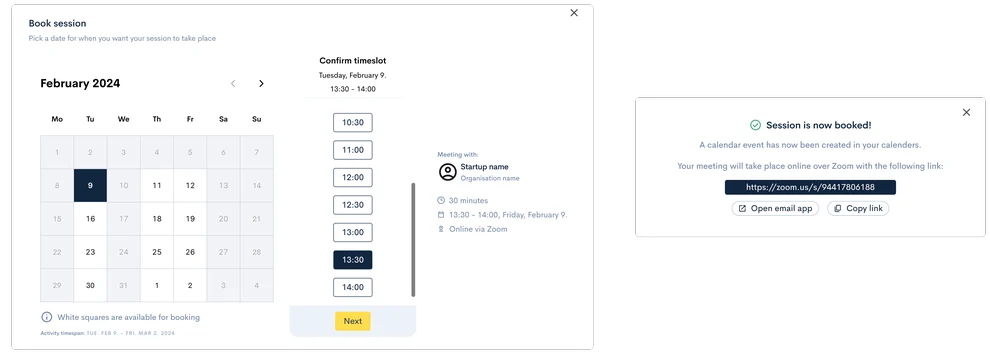
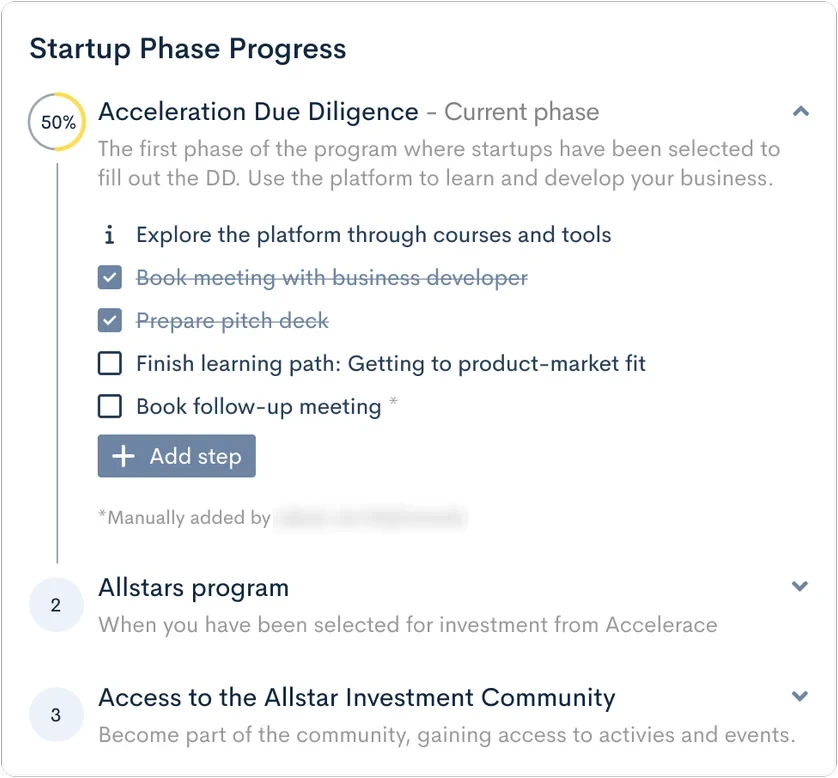
Booking a meeting also became a step in the startup’s phase progress. Startups and program managers see the same steps, so program managers can see who has booked and add steps of their own.
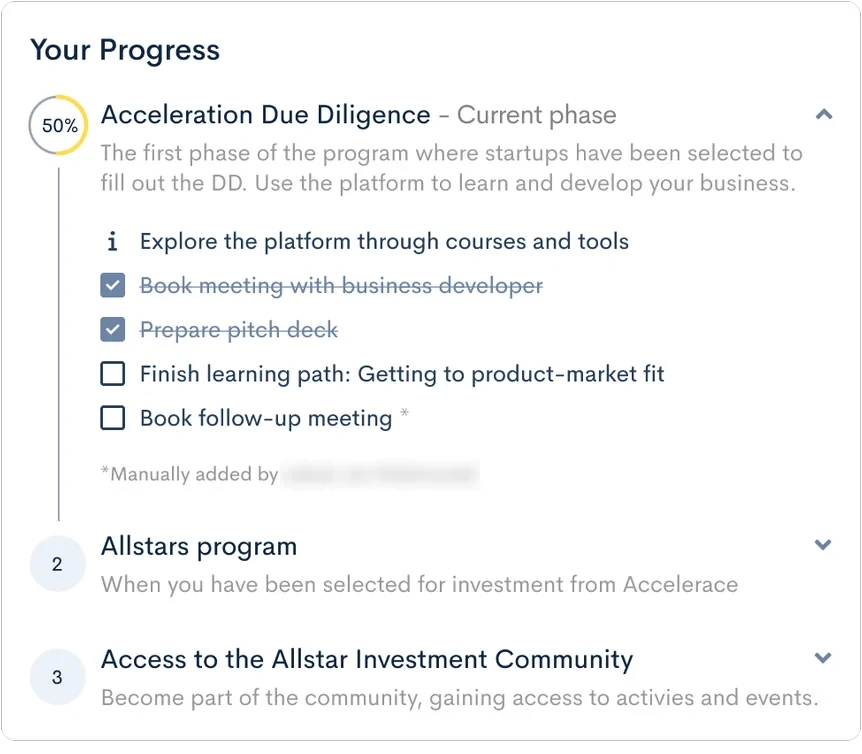
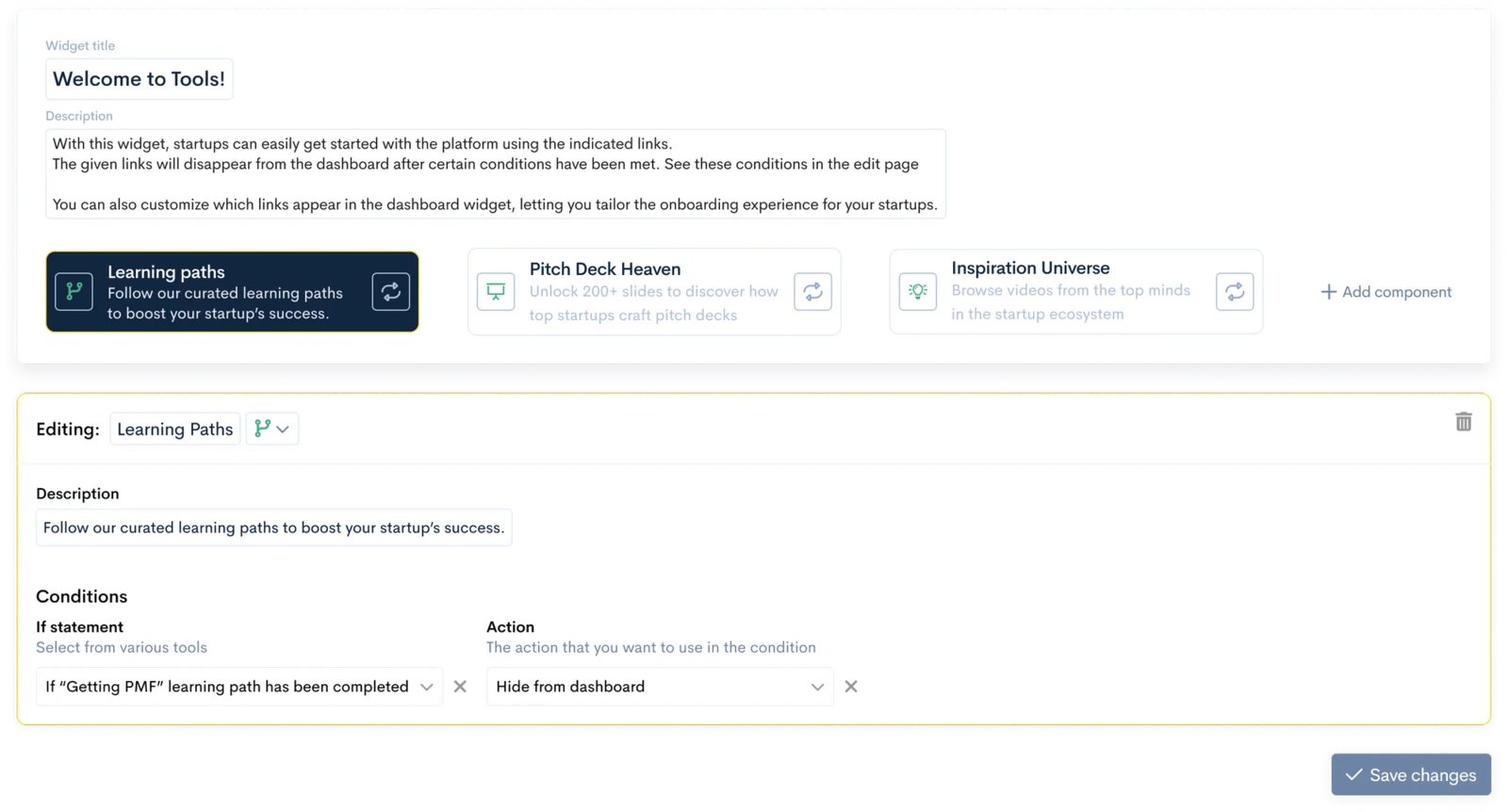
With every meeting and step now on the platform, we could act on them. We built a more flexible automation foundation, so program managers can set if/then rules and follow-ups happen without chasing every startup by hand.
Outcomes
KU Lighthouse became a paying customer. The meeting system went out to all of Accelerace’s programs, and Accelerace came to rely on the automation flows for its own emails and meeting setup.
Reflections
A central lesson was keeping the focus on the foundational software, and figuring out how each customer’s needs build on top of it. Rather than making individual features tailor-made for each client, I learned that it is much more scalable to consider the wider tech stack, platform and strategy, and align them into a product that helps multiple user groups at scale.
I also enjoyed getting a different perspective. Seeing how fundamentally different KU Lighthouse’s flow was sparked new ideas about my own approach to the Tools platform.